Is Now the Right Time to Remodel? What the 2026 Construction Market Tells Homeowners
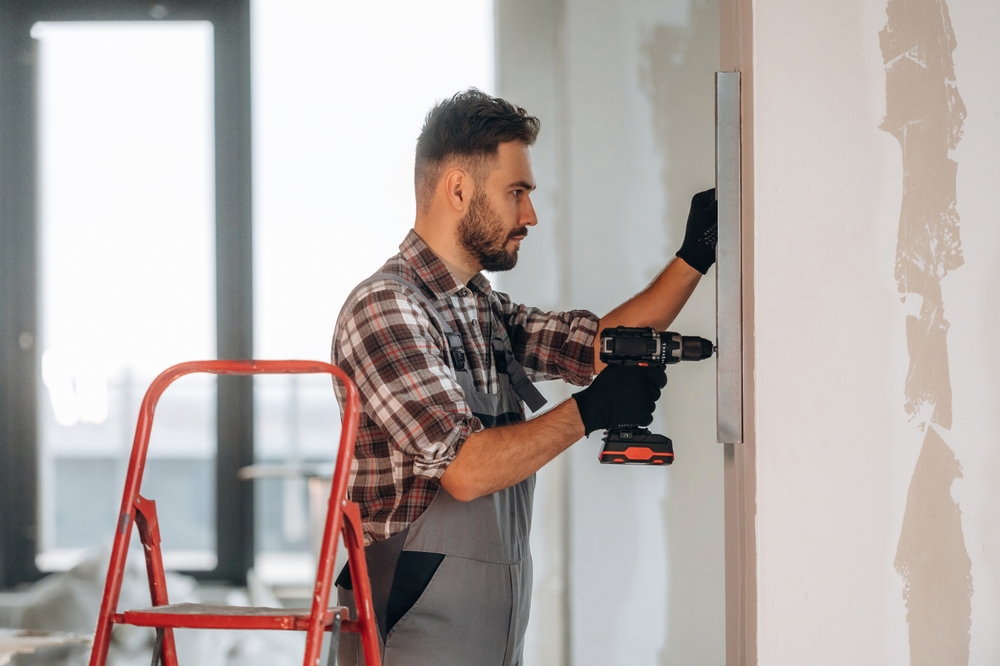 Most homeowners aren't waiting on the real estate market anymore. They're looking around at what they already own and deciding to make it better. A kitchen that never quite worked. A bathroom that hasn't been touched in fifteen years. A basement sitting empty when it could be something useful. The decision to stop waiting and start building is happening across the country right now — and the data behind it tells a compelling story.
If you've been on the fence about a renovation, here's what the 2026 construction market actually looks like, what projects are paying off, and why working with the right contractor makes the difference between a project you're proud of and one you're still paying to fix.
Homeowners Are Spending More on Their Homes Than Ever Before
The numbers coming out of 2026 are hard to argue with. According to Harvard University's Joint Center for Housing Studies, total homeowner spending on improvements and repairs is projected to reach $522 billion by the end of this year. That's a record. And it isn't driven by recklessness — it's driven by necessity, by pent-up demand, and by millions of homeowners who've decided that improving the home they're in makes more financial sense than chasing a new one at today's mortgage rates.
The 2026 Houzz & Home Study, which gathered responses from more than 20,000 U.S. homeowners, puts the median renovation spend at $20,000 for 2025 — unchanged from 2024, which speaks to the market's stability. At the higher end, the top 10% of remodelers spent $150,000 or more per project last year, up from $140,000 the year before. That upward movement at the high end tells you something: people who are serious about their homes aren't pulling back. They're leaning in.
More than half of all U.S. homeowners — 54% — completed at least one renovation project in 2025. Of those, 40% said finally having the time was what got them moving, and 36% said having the financing in place was the deciding factor. Nearly two-thirds of homeowners plan to stay in their current home for 11 years or more. That's not a temporary decision. That's a long-term commitment to a space, and it's exactly the mindset that makes investing in quality construction worth every dollar.
Tavares Construction LLC works with homeowners who think that way. Whether you're planning one room or a full-scale renovation, we bring the same level of attention and craftsmanship to every project — because we understand that what we build, you'll live with for years.
What Kitchen and Bathroom Projects Actually Cost — and What You'll Get Back
Before any renovation conversation gets serious, the budget question comes up. And it should. Here's what credible industry data says about the two most popular project categories in 2026.
Kitchen Remodels
Kitchen renovations typically run between $75 and $200 per square foot in 2026. Industry guidance generally suggests budgeting 5% to 15% of your home's total value for a full kitchen remodel — so on a $400,000 home, you're looking at a range of $20,000 to $60,000 depending on scope and materials. That's a real investment, and the return on it depends almost entirely on how the project is planned and executed.
Minor to midrange kitchen remodels continue to deliver the highest return on investment of any interior project — 113% nationally, according to the 2025 Cost vs. Value Report from the Journal of Light Construction. That means a well-scoped kitchen update can return more than it costs. A full gut renovation, on the other hand, returns closer to 51%. The takeaway is straightforward: targeted, well-planned improvements consistently outperform large-scale overhauls. Tavares Construction LLC helps homeowners find that sweet spot — the scope that improves daily life and protects resale value — before the first tool is ever picked up.
One thing worth understanding upfront: labor typically makes up 50% to 60% of the total cost of a kitchen project. That percentage has been climbing. When you see a bid that looks dramatically lower than others, the difference almost always shows up in the labor — which means it shows up in the quality of the finished work.
Bathroom Remodels
Bathroom renovation costs in 2026 run from $80 to $120 per square foot for a budget cosmetic refresh, $180 to $280 per square foot for a midrange quality update, and $500 and above for luxury builds. For a standard bathroom measuring 40 to 150 square feet, most homeowners land between $6,456 and $24,715 in total project cost — based on survey data from more than 1,000 homeowners collected by This Old House in 2026.
The return on a midrange bathroom remodel sits at approximately 80% of total cost at resale, according to the Journal of Light Construction's 2025 Cost vs. Value Report. That's the highest it has been in nearly two decades. Nearly 95% of homeowners who completed a bathroom renovation this year reported satisfaction with the result — one of the strongest satisfaction rates of any project category tracked.
Here's something that number doesn't show: about one in three homeowners said the final cost came in higher than they expected. The most common reasons were plumbing issues discovered mid-project, water damage behind walls, and structural repairs that weren't visible during the initial estimate. That's not a reason to avoid a bathroom remodel — it's a reason to hire a contractor who does a proper pre-renovation assessment, not just a quick visual and a number. At Tavares Construction LLC, that assessment is standard practice, because a homeowner who knows the full picture going in is a homeowner who finishes the project satisfied.
The Labor Shortage Is Reshaping the Market — and Homeowners Need to Know It
There's a challenge in the 2026 construction market that doesn't get enough attention in the conversations homeowners are having with contractors. The skilled labor shortage in the trades is severe, and it's getting worse.
The National Association of Home Builders estimates the construction industry will need 2.17 million additional workers between 2024 and 2026 just to keep pace with current demand. A landmark study from the Home Builders Institute and NAHB found that this shortage costs the residential construction sector $10.8 billion every single year — $2.663 billion in higher project carrying costs and $8.143 billion in lost home production, representing roughly 19,000 homes that simply didn't get built in 2024.
For homeowners, those numbers show up in two practical ways: higher labor costs and longer timelines. Licensed plumbers are now charging $85 to $175 per hour in 2026 — an 8% to 10% increase over last year. Electricians are billing at $60 to $145 per hour, up 6% to 8%. In some high-demand markets, specialized trade wages jumped 9% to 11% in a single year. Beyond cost, the labor shortage is pushing project timelines out by one to two weeks on average, and contractors with experienced, consistent crews are in short supply.
What this means practically is simple: book ahead. Homeowners who schedule two to three months in advance are getting better crews, more predictable timelines, and in some cases, more competitive pricing than those who call in urgency. Late fall and winter — November through February — often carry better contractor availability for interior projects and occasionally come with modest off-season advantages.
More importantly, it means who you hire matters now more than it ever has. A contractor running an experienced in-house crew delivers fundamentally different results than one assembling subcontractors project by project from whoever's available. Tavares Construction LLC is built around consistency — the same standards, the same quality of work, on every job we take.
What Homeowners Are Actually Putting Money Into Right Now
The renovation landscape in 2026 is broader than just kitchens and baths. Homeowner priorities have shifted, and the data reflects it clearly.
Infrastructure is leading the charge. More than 27% of renovating homeowners invested in plumbing upgrades in 2024 — the single most common project category. Electrical work followed at 25%. Heating and cooling system upgrades each accounted for roughly 22% of renovation activity. These aren't glamorous projects, but they're the ones that protect the value of everything else in the home. More than half of all U.S. housing stock was built before 1980, and those aging systems are reaching the end of their useful lives across millions of homes at once. Homes built before 1980 also average 15% to 25% higher total renovation costs than newer construction because of what gets uncovered when walls open up.
On the surface-level side, paint remains the most commonly purchased home improvement category at 62% of homeowners, followed by lighting fixtures at 48% and faucets and fixtures at 46%. These are the kinds of improvements that change the feel of a space without requiring a major construction engagement — and they're often the right place to start while a larger project is being planned and budgeted.
Generationally, seniors aged 81 and older led all age groups in renovation spending in 2025, with a median project spend of $25,000. Gen X homeowners followed at $24,000, and Baby Boomers at $22,000. Gen Z is entering the renovation market faster than most people expected, doubling their share of active renovating homeowners from 0.2% in 2024 to 0.5% in 2025 — a sign that a new generation is starting to take residential investment seriously.
The motivations pulling people toward renovation have also evolved. Personalizing a space to match how life actually works — home offices, multigenerational living setups, accessibility improvements — now ranks among the top five drivers of renovation decisions nationwide. Homeowners aren't just building for resale anymore. They're building for the way they live right now.
How to Hire the Right General Contractor in 2026
The U.S. has more active remodeling businesses today than at any point in the industry's history. More competition can mean better pricing, but it also means the market is full of contractors operating at very different levels of skill, professionalism, and accountability. Here's what credible industry guidance — from NAHB, Angi, and the National Kitchen and Bath Association — consistently recommends before signing any contract.
Verify licensing and insurance directly — not just verbally. Ask for the license number and confirm it through your state's contractor licensing board. Request a certificate of general liability insurance and check that it's current. An unlicensed contractor can void your homeowner's insurance, leave you personally liable for on-site injuries, and give you no legal recourse if work fails inspection. Tavares Construction LLC carries full licensing and insurance on every project, and we welcome that verification upfront.
Understand what labor costs actually represent before comparing bids. When labor makes up half to three-fifths of a project's total cost, a bid that's dramatically lower than others almost always reflects a reduction in labor quality — not a more efficient operation. Low bids are the leading source of cost overruns, unfinished work, and failed inspections. The cheapest contractor is rarely the least expensive project.
Always carry a contingency budget. Industry guidance from NAHB, Angi, and independent financial advisors consistently recommends reserving 10% to 20% of your total project budget for unexpected conditions. In homes built before 1980, that contingency isn't optional — it's a near-certainty. Tavares Construction LLC walks every client through this before work begins, because a homeowner who understands the full financial picture from the start is a homeowner who finishes the job satisfied.
Get the full scope in writing before anything starts. Scope of work, material specifications, payment schedule, timeline, permit responsibilities, and warranty terms all belong in a written contract — not a handshake. Ambiguity in a contract gets resolved in the contractor's favor. A clear, complete agreement protects you at every stage of the project.
Plan ahead and schedule with intention. Book two to three months in advance when possible. Ask specifically how a contractor handles unexpected conditions — because they will come up. Ask for references from projects similar in scope and budget to yours, and actually call them.
Building Something That Lasts Starts with the Right Team
The 2026 construction market is full of opportunity for homeowners who approach it with the right information and the right partner. Record-level renovation spending, strong ROI on targeted projects, and a genuine national commitment to improving existing housing stock all point in the same direction: this is a good time to invest in your home — if you do it right.
What "right" looks like is straightforward. It means hiring a licensed, insured contractor with a consistent crew and a transparent process. It means defining scope carefully, budgeting honestly, and building with materials and craftsmanship that hold up over time. It means working with someone who communicates clearly from the first call to the final walkthrough and stands behind the work after the project is done.
That's what Tavares Construction LLC delivers — on every job, for every client.
Call Tavares Construction LLC today. Let's talk about your home, your timeline, and what's possible.